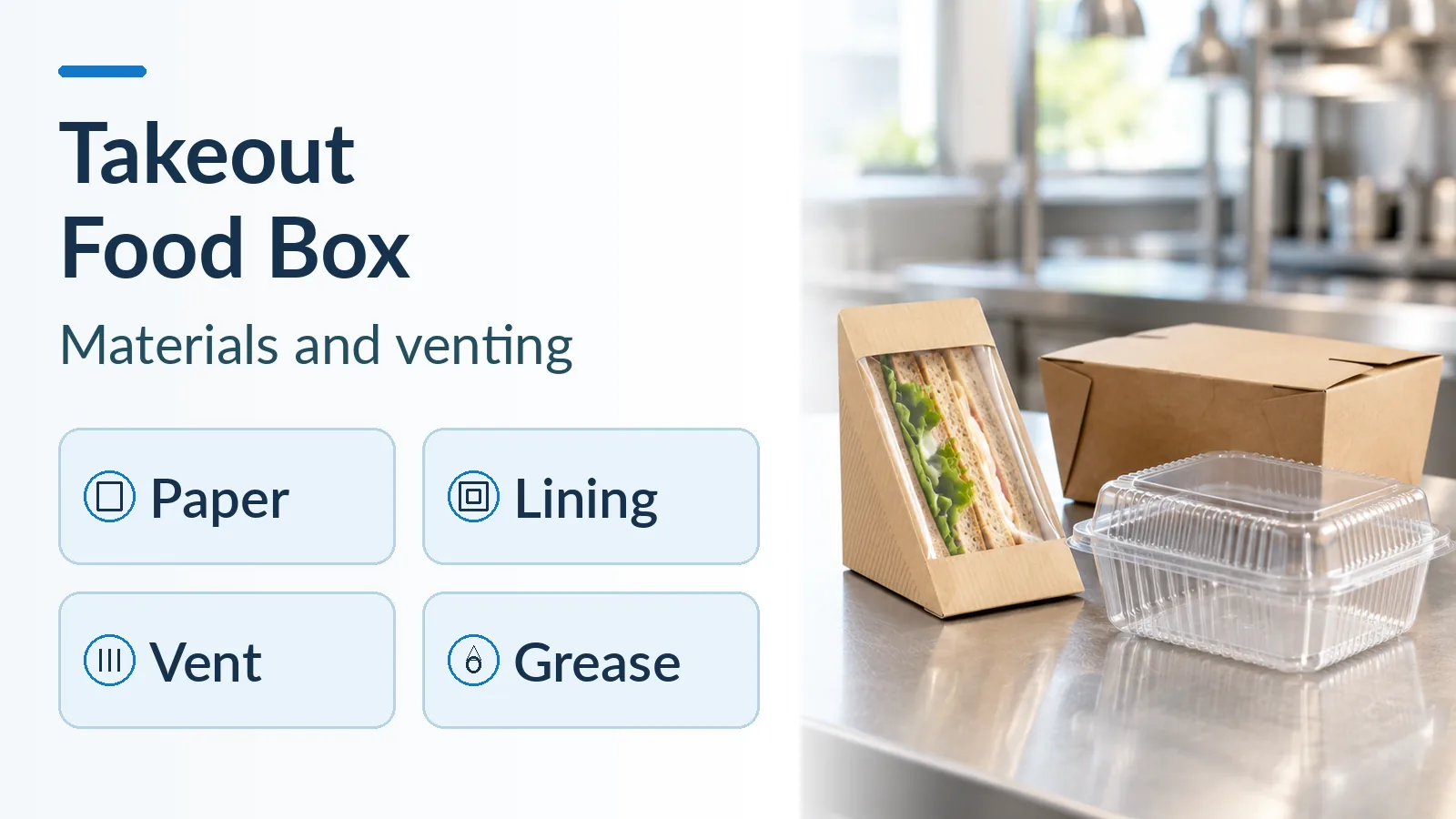
A mismatched lid leaks on the ride, and the next case is the cost of approving a container from a catalog photo. Compare two samples on the same dish, the same route, and the same bag steps, and leave every cell you did not see blank.
A takeout packaging sample is one container, its lid, and the pieces that leave with that dish. Approve the pair only when both samples ran the same dish, the same route, and the same bag steps, and when the arrival notes match the condition you wrote before the run. The National Restaurant Association’s article dated 21 May 2025 tells operators to get samples and to try them on off-premises orders of their own menu items (page saved 11 October 2026). The recorded search wording is “best takeout packaging for restaurant” (US English autocomplete, saved the same day). This page is the blank sheet for that run. It ranks no material and it sets no price.
- Write the dish, the route, and the bag steps once, and use that row for both samples.
- Copy the sample table and leave both columns empty until the run.
- Count every piece that leaves with the order. Leave the unit-cost cell blank until an invoice shows a number.
- Approve the pair, or run the samples again. A blank observation is not an approval.
- A catalog of container types is not this sheet.
What has to stay the same on both samples?
Write the shared conditions before anyone packs a sample. If the two runs do not share the dish or the route, they are two separate trials. Do not approve from that pair.
| Condition | What you write | Entry |
|---|---|---|
| Dish | The menu item you packed | |
| Portion | What went into the container | |
| Route | Pickup wait, or the delivery route you actually ran. Write minutes only if you timed them | |
| Bag steps | Label, tape or sticker, sides with the meal, drinks in the hot bag or set apart | |
| Who looked | You, a staff member, or a guest questionnaire |
The Association’s article says to order takeout or delivery from your own menu and to judge the meal that arrives. It also names two other ways to get notes: staff coupons to order menu items at cost on a night off, in exchange for feedback, or a questionnaire with the to-go order. Write which of those you used. The article’s evaluation list is temperature, food texture, visual appeal, package integrity, package attractiveness, and branding impact. Those words are the row labels below. They are not scores this page has filled in.
DoorDash’s merchant article dated 29 September 2026, in the capture saved 11 October 2026, says containers for hot soups and stews should look different from containers for cold salad or ice cream. Put the dish name on the condition row so a soup sample is not compared with a salad sample. The same article says the package should stay tightly closed and travel upright. Write that only for the run you watched.
GreenPack Life’s opening checklist, saved 11 October 2026, says to test items with real food, real lids, real bags, and a realistic pickup or delivery time. The saved page does not give that time in minutes. If you timed the run, write the minutes. If you did not, leave the route cell’s time blank.
Takeaway: One dish, one route, and one set of bag steps for both samples. A difference on any of those three means you run them again.
What do you write for each container and lid?
One row pair, two samples. The entry cells start empty. Write what is printed on the sample or on the supplier sheet in front of you. If that sheet is silent, leave the cell blank.
| Line | Sample A | Sample B |
|---|---|---|
| Sample id or SKU | ||
| Container, as named on the sample or the supplier sheet | ||
| Lid family | ||
| Did the lid seat on this container | ||
| Bag | ||
| Temperature on arrival | ||
| Texture | ||
| How the food looked | ||
| Flavor note, if someone tasted it | ||
| Leak, tear, or lid off | ||
| Entrée, sides, and sauce still separate | ||
| Heat or moisture line from the supplier sheet |
The Association’s article splits temperature into two questions. Retention is how the package holds the food hot or cold on the trip. Exposure is how the material stands up to heat or cold. Its examples: aluminum retains heat and cannot be reheated in a microwave; some plastic containers will melt if the food they contain goes above 140°F. Those are the article’s examples from 21 May 2025, not a holding rule for your kitchen. Write “still hot,” “cold item warm,” or whatever you observed. Write 140°F on the heat line only when the supplier sheet in front of you states it. Otherwise leave that cell blank.
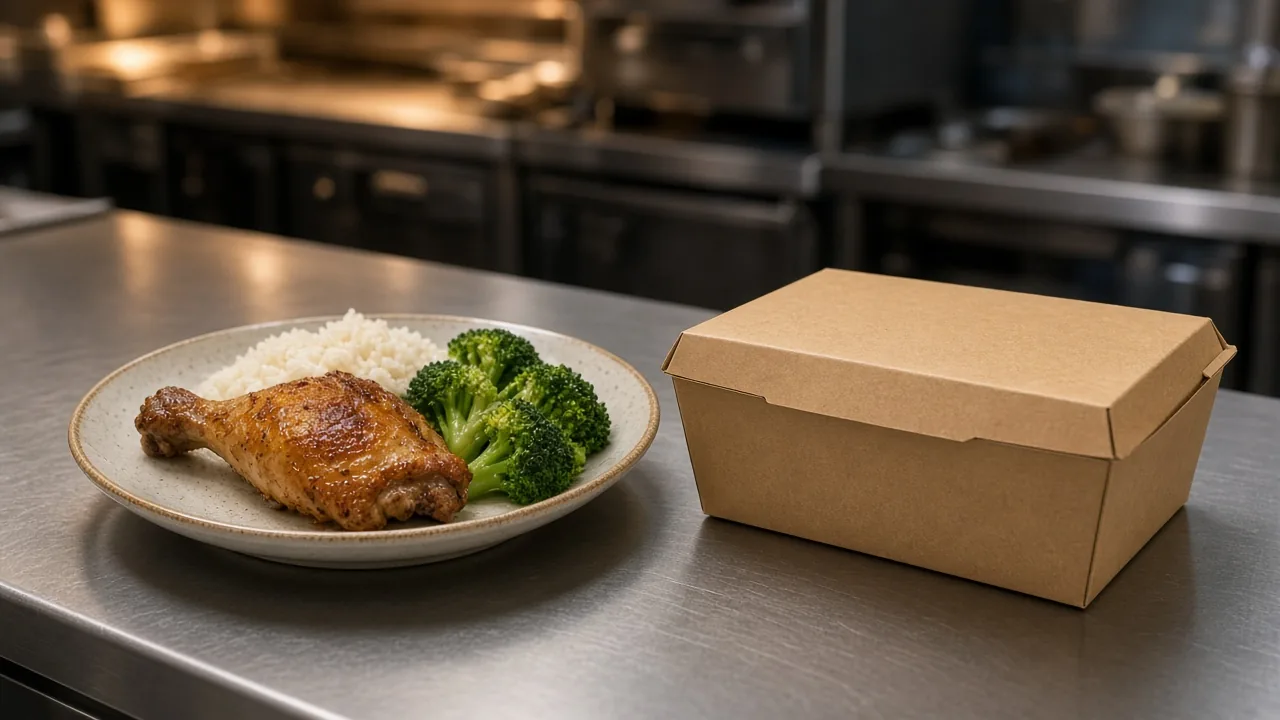
On integrity, the same article asks whether the package survives bumps, holds the contents, stays leak-proof, and is tamper-evident or tamper-proof. It says kraft paper boxes and bowls need a moisture barrier or lining for wet foods such as soup or sauced items. Write “barrier” only when the supplier sheet says so.
The article also gives matching examples, which this sheet does not turn into a ranking. It names a cardboard box for pizza, and for soup a round polypropylene container with a snap-on lid or a round paperboard container with a leak-proof liner. It lists glass, metal, foil, paper, paperboard, cardboard, plastics, and compostables as the range of choices. Copy a material name onto the container line only when it is the sample you packed. If you are choosing plastic, the article says to look for PFAS-free and BPA-free materials. Write those words only when the supplier sheet says them.
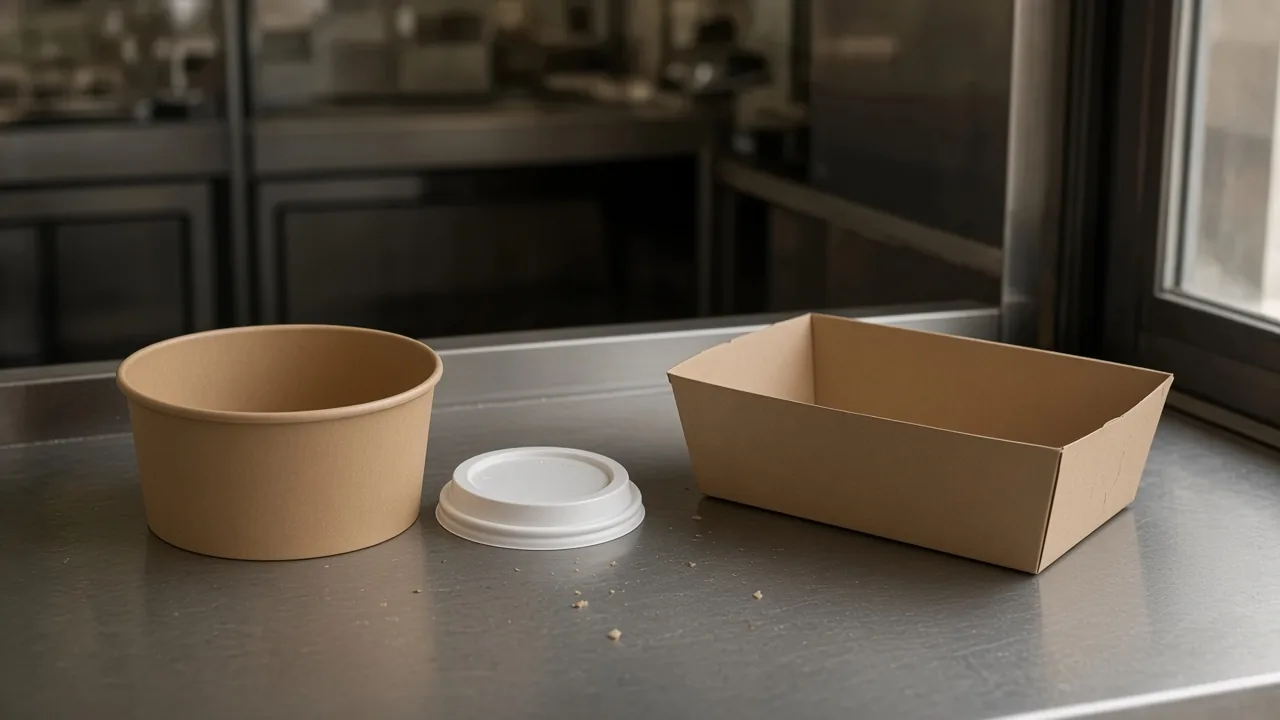
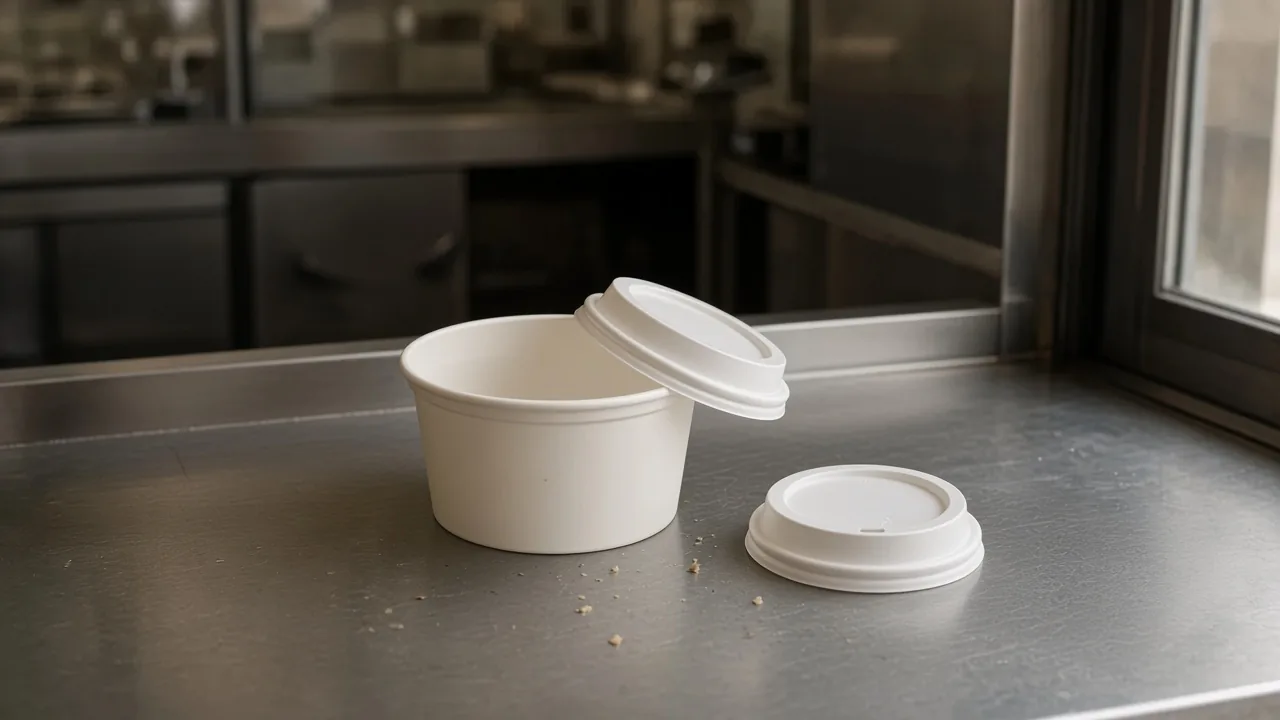
On versatility, the article says some lines use the same lid on different size containers. GreenPack’s checklist says to keep lookalike lids apart, and it names 95 mm and 98 mm drink lids as the example. Write the lid family you can see. If you did not press the lid onto the container, leave “Did the lid seat” blank. The photograph on this page shows one lid tipped on a rim and a second lid beside the bowl. It is not a measurement of either lid.
Grab n Go Packaging’s checklist, a UK supplier page saved 11 October 2026, tells the reader to drop the container, tilt it, and simulate the trip. Write leak or no leak only if you did that. If you did not tilt the sample, leave the leak cell blank. That page also discusses UK labeling and a UK plastics tax. Those notes stay on that page. They are not US rules on this sheet.
DoorDash’s seven kitchen steps, from the same 29 September 2026 article, are the bag-step checks: a container that fits the item and does not leak or rip, a heat-resistant material so it does not warp, a contents label, tape or a sticker to keep it shut, sides and condiments with the meal, cold drinks apart from the hot-food bag in a sturdy drink tray, a hot tray or warming equipment until pickup, and the same steps on the next order. Write what you saw. The article’s sentences on eco-friendly containers and on what to review in the cost are cut off in the 11 October 2026 capture, so this page does not finish them.
Takeaway: Fill both sample columns from the pieces in your hand and from the supplier sheet. A silent sheet stays a blank cell.
What do you count on the whole order?
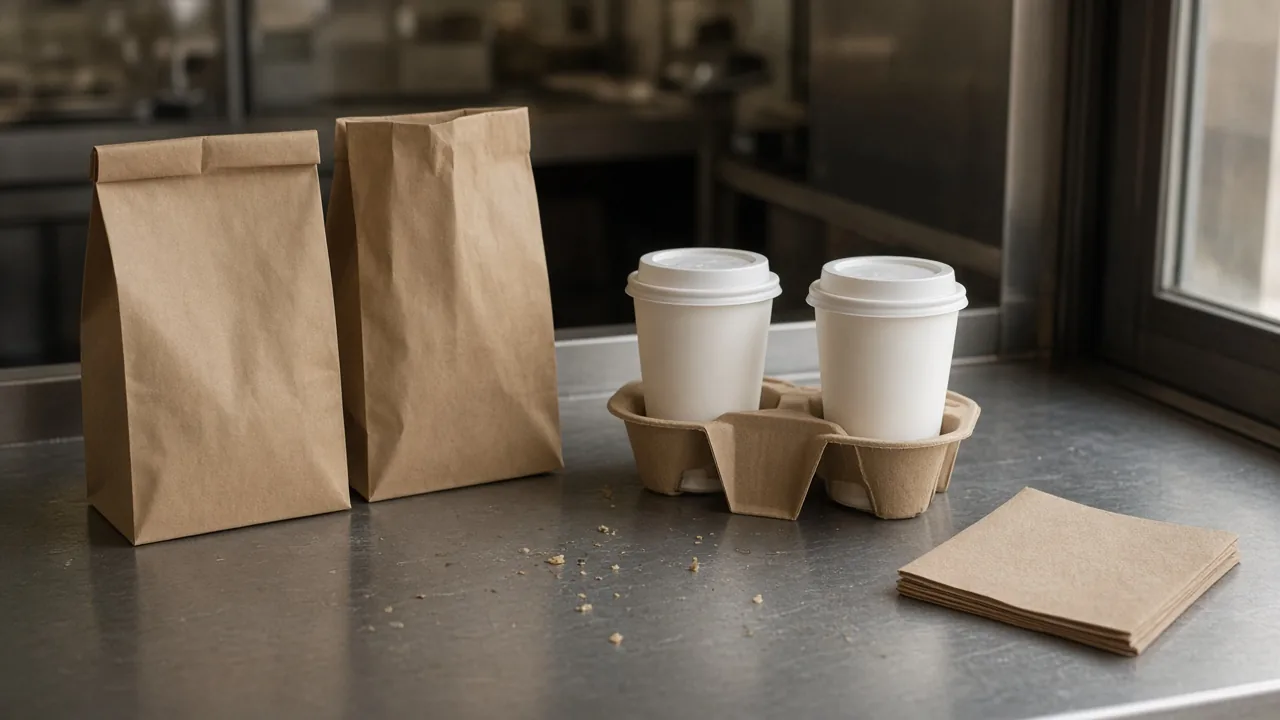
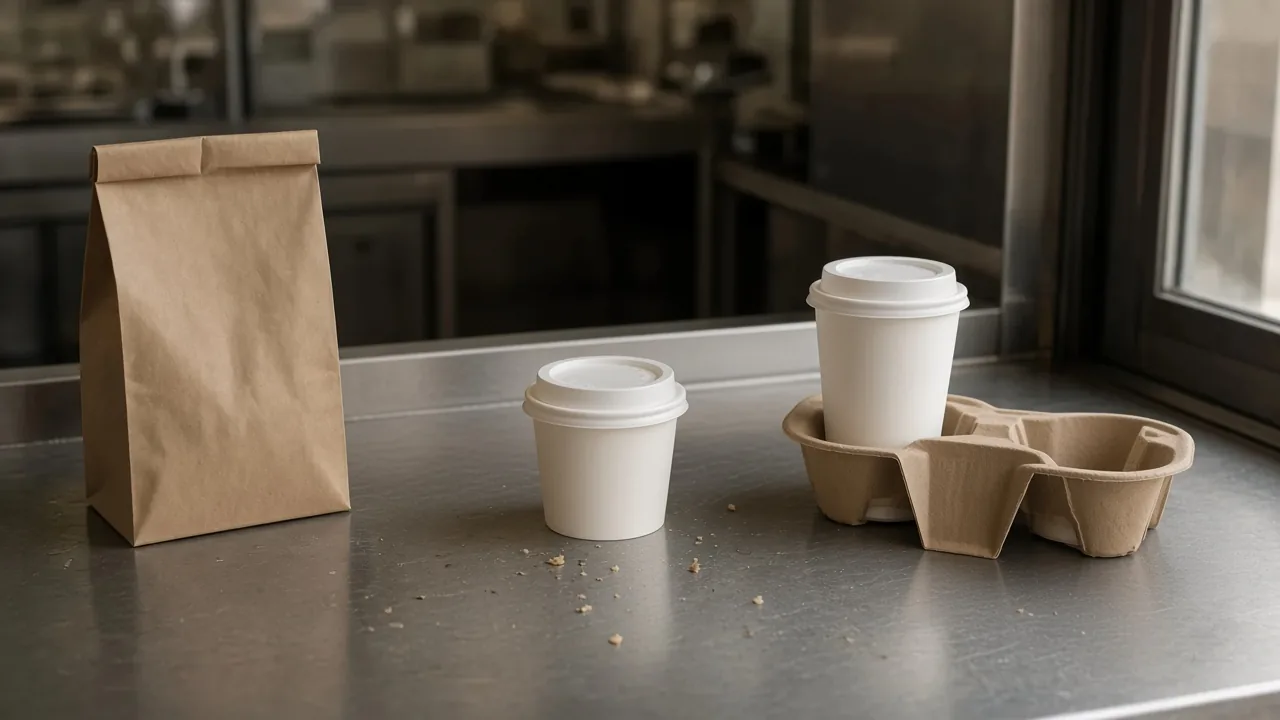
The container is one line. The lid, bag, tape or sticker, sauce cup, label, drink tray, napkin, and utensil are their own lines when they leave with the order. GreenPack’s checklist says a container without its matching lid, bag, label, sauce cup, or utensil still leaves a gap at the station. Count the pieces this order used. A zero is a count you made. A blank means you have not counted that line.
| Piece | Count on this order | Unit from the invoice | Extended |
|---|---|---|---|
| Container | |||
| Lid | |||
| Bag | |||
| Tape or sticker | |||
| Sauce cup | |||
| Label | |||
| Drink tray | |||
| Napkin or utensil |
DoorDash’s article says packaging costs can add up and should be reviewed. It does not print a unit price in the lines used here. Leave the unit cell blank until the invoice in front of you shows a number. Do not copy a catalog list price onto this sheet. Once that invoice number exists, the delivery pricing worksheet is where packaging enters the price for one order. This sheet does not set the menu price.
After you approve a pair, GreenPack’s approved list is the purchasing note: product name, size, material as the supplier sheet states it, lid family, case pack, supplier, reorder point, backup option, and the menu items that use it. Case pack, reorder point, and shelf space stay blank until the supplier sheet or your own shelf measurement shows them. The saved page says to measure shelves, dry storage, and the packing station before the cases arrive. It does not give those measurements.
Takeaway: Count the pieces on this order, and leave every dollar cell blank until the invoice shows it.
When do you approve the pair, and when do you run it again?
Write the decision after the three tables hold the notes you observed. A cell you have not seen stays blank, and a blank required cell means you run the samples again.
| Line | Entry |
|---|---|
| Samples on this run | |
| Dish and route the same for both | |
| Lid seated on each sample | |
| Leak, tear, or shift you saw | |
| Pieces counted | |
| Decision | |
| What changes before the next run |
Run the samples again when any of these is true:
- The dish or the route differed between the two samples.
- The lid did not seat, or you did not check the seat.
- You saw a leak, a tear, or a lid come off. Grab n Go’s drop-and-tilt check counts only if you did it.
- The entrée, a side, or a sauce mixed when the condition you wrote asked for them to stay apart. The Association’s article asks whether those parts are still separate after the trip.
- The dish is wet or hot and the supplier sheet’s heat or moisture line is blank. The Association’s article says kraft needs a barrier for soup or sauced food, and DoorDash says to use a heat-resistant material so the container does not warp. With no line on the sheet, you do not have that note yet.
Approve the pair when the shared conditions matched and the arrival notes meet the condition you wrote before the run. If you never wrote that condition, the decision cell stays blank. Grab n Go tells a buyer to look at samples before a large order. The large order waits on this decision line.
A dish that fails the trip while you are still deciding whether it belongs on the delivery menu goes on the delivery dish trial. A missing line after the order has already left goes on the missing-item log. This sheet stops at the sample you have not approved yet.
Takeaway: Approve only a pair that shared the dish, the route, and the bag steps, and whose arrival notes meet the condition you wrote first.
When this does not apply
- Material rankings and certifications. The Association’s article describes compostable, recyclable, and reusable demand, and it names PFAS-free and BPA-free as words to look for on plastic. Write those words when the supplier sheet says them. This page does not certify a sample.
- UK labeling and packaging tax. Those passages on the Grab n Go page are not copied here as US rules.
- Catalog type names. Graphic Packaging’s to-go page, saved 11 October 2026, lists paperboard clamshells and trays for sandwiches, sides, hot dogs, and single pizza slices, plus food trays, boxes, barns, pails, cylindrical containers, buckets, carriers, and fry packaging. That list is a catalog. It is not a side-by-side sample record. The saved text shows no publication date.
- Menu admission and missing-item claims. Use the dish trial and the missing-item log linked above.
- Menu price and supplier price. Use the pricing worksheet after the invoice shows a unit. This sheet has no list price.
- Food-safety holding rules. The 140°F figure above is the Association’s example of a plastic melting. It is not a time or temperature limit for your line. No holding time appears in the pages used here.
- Alcohol. This page does not add drinks as a product to sell, and it does not encourage anyone to drink.
- Another kitchen’s result. The entry columns stay empty until your shift fills them.
Takeaway: Use the sheet for two samples of packaging you can hold, and leave certifications, prices, and safety limits to the documents that state them.
How we checked this
Compiled on 14 October 2026 from pages saved on 11 October 2026.
The National Restaurant Association article is dated 21 May 2025. This page uses its instruction to get samples and to try them on your own off-premises orders, the six evaluation labels, the temperature split with the aluminum and 140°F examples, the integrity questions including the kraft barrier for soup or sauced food, the pizza and soup package examples, the material list, the PFAS-free and BPA-free note for plastic, the same-lid versatility point, and the staff-coupon and questionnaire options. Its sales survey figures are not used.
GreenPack Life’s opening checklist had no publication date in the saved text. This page uses the menu-to-package map, the instruction to test with real food, lids, bags, and a realistic time, the lid-family note with the 95 mm and 98 mm example, the warning against buying a container without its matching pieces, the approved-list fields, and the instruction to measure storage before cases arrive. The supplier form on that page is not used.
Grab n Go’s checklist had no publication date in the saved text. This page uses the drop, tilt, and trip check, and the advice to look at samples before a large order. UK labeling and tax passages are not applied here. A consumer percentage in that article’s opening is not used, because the saved text does not show the study behind it.
Graphic Packaging’s catalog is used only as a type list. Certification marks and trademarked lines on that page are not adopted as conclusions.
DoorDash’s packaging article is dated 29 September 2026. The capture saved 11 October 2026 supplies the hot-versus-cold container distinction, the closed-and-upright line, the seven kitchen steps, and the statement that packaging costs can add up. Sentences that break off in that capture are not completed. About states who publishes this independent site.
Takeaway: Treat every number on the sheet as something you copy from a sample, a supplier sheet, or an invoice, or leave blank.
Related reading
- Delivery dish trial. Use it when the sample run shows the dish itself should stay off the delivery menu.
- Missing-item log. Use it after an order has left and a line is missing.
- Delivery pricing worksheet. Use it after the invoice gives you a packaging unit for one order.
- Delivery operations and the blog list the other delivery pages.